...
Single source of truth

One view of your data.
One understanding
of your business.

Unify disconnected data into a governed semantic foundation
for every dashboard, notebook, LLM, and agent

Quick Read

  • One unified view across your entire data estate
  • One shared understanding of your business
  • Business-friendly terms for easier data exploration
  • Governed semantics for BI, deep context for AI
  • Consistent, trusted answers across AI and BI
Single source of truth 4

The gap between data and consumption

Enterprise data can be massive and siloed. Without a semantic layer, it reaches teams, BI tools and AI models in ways that distort, contradict and mislead.

vector-n-shape

Data lives across platforms without a single, connected view

vector-two-semicircles-downward

Business meaning is defined separately inside different tools and workflows

vector-double-rhombus

Technical structures don’t easily translate into clear business language

vector-four-circles

AI and BI rely on different interpretations of the same data

One view
of your data

  • vector-n-shape

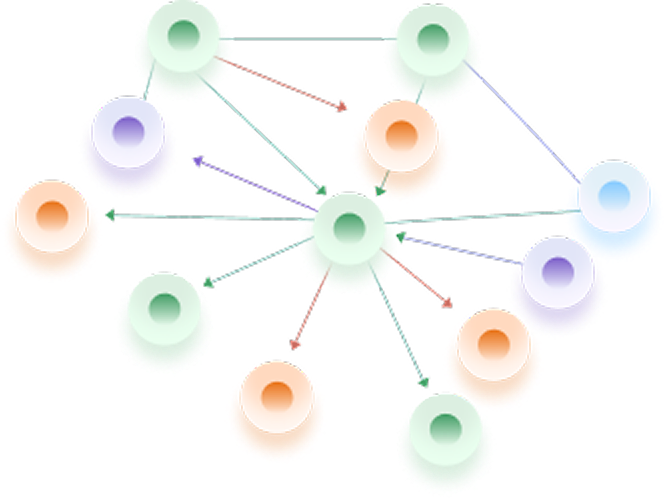
    Distributed enterprise data abstracted into a single logical layer

  • vector-four-circles

    No remodeling or recreating business logic inside each tool

  • vector-double-rhombus

    Data remains in existing warehouses & lakehouses - no copying, movement, or consolidation

One understanding
of your business

  • vector-n-shape

    Semantics, knowledge, relationships, and rules defined once

  • vector-four-circles

    Metrics, entities, and business concepts interpreted consistently everywhere

  • No conflicting metrics across tools and teams

One shared
business vocabulary

  • vector-n-shape

    Business-friendly terms instead of database schemas and tables

  • vector-four-circles

    Eliminate translation gaps between business and data teams

  • Make enterprise data easier to explore and analyze

One layer
for both AI and BI

  • vector-n-shape

    One semantic foundation serving every AI and BI experience

  • vector-four-circles

    Business context assembled once, reused across every consumer

  • Consistent answers across dashboards, notebooks, copilots, and agents

How Kyvos fits
in your analytics stack

https://www.kyvosinsights.com/wp-content/uploads/2026/09/arch-desk-close.svg
https://www.kyvosinsights.com/wp-content/uploads/2026/09/arch-close-mob.svg

FAQs

What does a single source of truth mean in enterprise analytics?
A single source of truth means every team, tool and platform works from the same business definitions—same metrics, same hierarchies, same logic. There is no reconciliation because there is no divergence.
How does Kyvos create a single source of truth?
Kyvos builds and deploys a unified semantic data model across distributed data platforms. Business logic is defined once in that model and shared with every BI tool, AI agent and application that connects to it—without moving or replicating data.
Does creating a single source of truth require data consolidation?
No. Kyvos establishes consistency logically, not physically. Your data remains in existing warehouses and lakehouses while the semantic layer unifies definitions across them.
How is this different from centralizing data in a warehouse?
Centralizing data solves storage, not meaning. Teams can still define metrics differently even from the same warehouse. Kyvos solves the semantic layer—ensuring business logic is consistent regardless of where data lives or which tool is querying it.
Does this work for both BI and AI use cases?
Yes. BI tools and AI agents connect to the same semantic foundation, so dashboards, forecasts reports and AI-generated insights all reflect the same definitions and calculations.
What happens when business definitions change?
Changes are made centrally in the semantic model. Updates propagate logically across use cases, avoiding duplicated effort and eliminating the need for enterprise-wide rework.
Can a single source of truth scale as the organization grows?
Yes. New datasets, domains and systems connect to the existing semantic model, inheriting established definitions and hierarchies without introducing fragmentation.
Does this require replacing our existing data infrastructure?
No. Kyvos overlays your existing warehouses and lakehouses. Your infrastructure stays intact; Kyvos unifies the meaning on top of it.